Science Corp. Raises $400M to Advance PRIMA Eye Implant Toward U.S. Use
- Mike Wheatley
- 987 views
Science Corp. secured $400 million at a $3.5 billion valuation as it pursues U.S. access for PRIMA and prepares human trials of a separate brain implant.
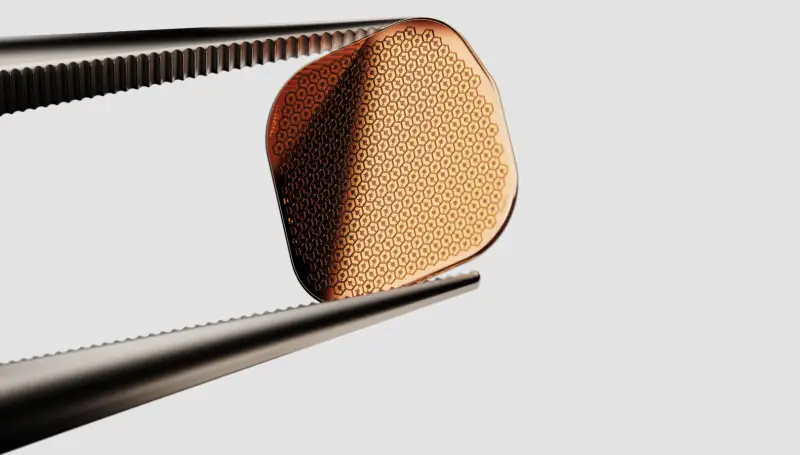
Science Corp. has secured $400 million in Series D financing, giving the company a $3.5 billion valuation and funding its push to bring its PRIMA vision implant to patients in the United States. The immediate test for the company is whether it can turn early use in Europe into broader clinical access, while its separate brain implant remains at the animal-testing stage.
Khosla Ventures led the financing. Other participants include the Ackman Oxman Institute, Tenet Healthcare, 885 Capital, Y Combinator and PLC Neurotech. The Ackman Oxman Institute was established earlier this year by hedge fund manager Bill Ackman and his wife, Neri Oxman; the financing marks one of its first ventures, based on the information disclosed.
PRIMA is the near-term focus
PRIMA is designed for people with age-related macular degeneration (AMD), a common cause of vision loss among older adults. The implant is placed in the eye and works with a pair of glasses to provide partial vision. Some European countries have approved the device, and patients in Germany have already received implants. Science says dozens more procedures are scheduled.
The company expects PRIMA to become available in Italy, France and the U.K. in the coming months. It also plans to offer the device to people paying out of pocket through a dedicated unit at Moorfields Private Eye Hospital in London. Science has not disclosed the price, leaving a key practical question unanswered for prospective patients and care teams.
For U.S. access, PRIMA is under review by the Food and Drug Administration (FDA). Science founder and Chief Executive Max Hodak told Bloomberg that he hopes the device will be available to U.S. patients early next year. That timing is a target, not a confirmed availability date: access depends on the FDA’s assessment of the device and the company’s chosen review pathway.
Science is pursuing a Humanitarian Device Exemption, a route for medical devices intended to treat or diagnose conditions affecting a small patient population. AMD itself is common, but the company argues that the form affecting both eyes is rare. That distinction is central to its case for this pathway, and the FDA’s review will determine whether the device can proceed on that basis.
How the implant and glasses work together
PRIMA contains 378 pixels, each fitted with a small electrode. The glasses capture the patient’s surroundings with a forward-facing camera, then produce infrared light signals based on that footage. When the light reaches the implant, it activates the electrodes, which stimulate cells in the retina. The system is intended to substitute for retinal tissue damaged by disease.
The glasses also include a lens designed to filter interference, including strong sunlight. The arrangement makes PRIMA a system rather than a standalone implant: the device in the eye, the camera and the infrared output in the glasses all contribute to the visual signal. For patients and clinicians, the practical questions include how partial vision supports everyday tasks and how people adapt to wearing and using the glasses. The available information does not give performance figures or describe specific patient outcomes, so the extent of the benefit should be judged from clinical evidence as it becomes available.
Science also intends to explore PRIMA for Stargardt’s disease and retinitis pigmentosa, two other conditions that can cause blindness. Those are future areas of development, rather than the current focus of the company’s rollout. Its near-term milestones remain European access and the FDA’s review for U.S. use in AMD.
Biohybrid remains at an earlier stage
The $400 million round also supports a broader ambition: Science is developing Biohybrid, an implant that combines cultured neurons with silicon chips and is designed to connect with the brain’s circuits. The company has identified the first disease it wants to address but has not named it.
Biohybrid has so far been tested only in animals. Science hopes to begin its first human clinical trials within the next 16 months, but that is a plan rather than a scheduled trial start. The company has recruited Yale neurosurgery professor Murat Günel. He has said the technology could have potential for Parkinson’s disease and other brain illnesses and injuries; Science has not said whether Parkinson’s is the first condition it plans to target.
For now, PRIMA offers the clearest measure of Science’s progress: patients have received implants in Germany, additional European procedures are planned, and the company is seeking U.S. access. The next details for clinicians and patients to watch are the FDA’s decision, the timing and terms of European availability, and evidence about how much functional vision PRIMA provides in practice. Biohybrid’s human trials would mark a separate and earlier development step.


