Genesis AI Raises $500 Million to Develop Its General-Purpose Robot Eno
- Maria Deutscher
- 830 views
Genesis AI raised $500 million at a $3.5 billion valuation to expand Eno’s training data and develop its general-purpose robotics platform.
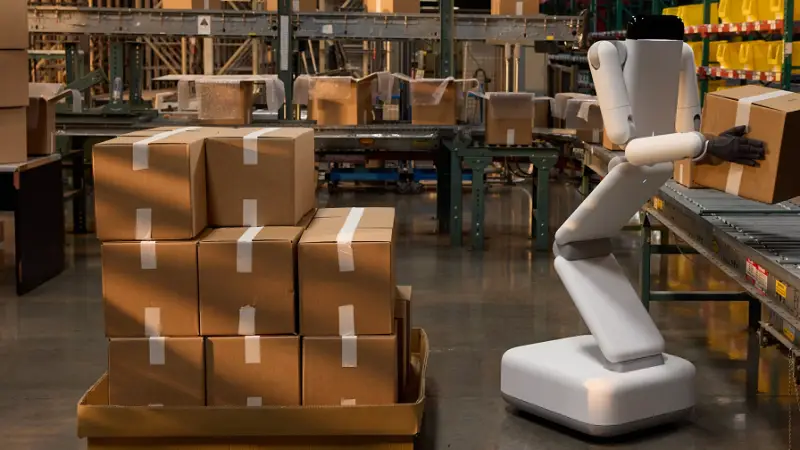
Genesis AI has raised $500 million in a Series A round at a $3.5 billion valuation, giving the Paris-based robotics company more resources to develop and deploy its general-purpose robot, Eno. Its approach combines a wheeled, adjustable-height body with human-like hands and an AI model trained to handle tasks that involve many steps.
The round was led by Premji Invest, Khosla Ventures and Eclipse. Other participants included the venture capital arms of Nvidia, Advanced Micro Devices, Zoom Communications, Samsung Electronics and Ericsson. Former Google CEO Eric Schmidt and other technology executives also contributed. Genesis plans to spend the funding on hiring AI researchers and robotics specialists, while increasing the collection of training data for its model.
A robot built around adaptable movement
Eno differs from humanoid robots that use legs to move. It travels on wheels, and its height can be changed by a hinged mechanism made from two large panels. That adjustable body lets Genesis configure the robot for different tasks, while its wheeled base provides the means to move between them.
The design reflects a practical challenge in general-purpose robotics: a robot needs to reach and manipulate objects in settings that vary in height and layout. Genesis describes Eno as a platform intended for work in both industrial environments and homes. Its adjustable structure is one part of that broader aim; the robot also needs to perceive tasks, control its movements and handle objects reliably.
Eno runs on GENE, Genesis’s custom AI model. The company says GENE is easier to train than neural networks designed specifically for robotics, a difference it says can lead to higher-quality output. The model’s performance will depend in part on the training examples available to it, so Genesis is putting more effort into gathering data as it develops the system.
Human demonstrations could ease data collection
Robotics training data has to fit the machine that will use it. A model built to control a four-legged robot, for example, needs examples that reflect how such a robot moves and completes tasks. Collecting demonstrations with the same kind of robot can be difficult, particularly when the machine has a specialized design.
Genesis’s proposed workaround is to make Eno’s palms and fingers closely resemble a human hand. That allows the company to train the robot using demonstrations of people performing tasks with their hands, rather than relying only on footage of robots doing the same work. Human demonstrations are easier to produce, the company’s approach assumes, and could provide a broader supply of examples for the model.
The hands have 20 degrees of freedom, compared with 27 in a human hand. Genesis has also covered them with a soft material designed to mimic skin. Those details point to the central role manipulation plays in the system: Eno must do more than travel through a space if it is to perform varied work. Its hands need to carry out the physical steps that make a task possible.
The approach still depends on how well demonstrations transfer to the robot. A person’s hand and Eno’s hands have different movement capabilities, and the robot’s wheeled body and adjustable frame also shape how it can interact with its surroundings. Genesis’s plan to expand training data suggests that building the model’s capabilities remains active work, even as the company shows tasks that involve several kinds of activity.
From demonstrations to longer tasks
Genesis says GENE can perform tasks involving dozens of steps. Company demonstration videos show Eno playing the piano, cooking and solving a Rubik’s Cube. These examples illustrate the range of actions the company is targeting, but they do not establish how consistently the robot performs those tasks outside demonstrations or how it handles everyday variation in a home or workplace.
For teams evaluating the technology, the distinction between performing a recorded demonstration and working reliably in a changing environment matters. A task with many steps can require a robot to coordinate repeated movements and manipulate different objects. Genesis has not provided details here about deployment numbers, operating costs or the conditions under which Eno performs each task. Its stated priority is to improve the model and move toward real-world deployment at scale.
Co-founder and CEO Zhou Xian said Genesis is building the robot itself so the company can refine its components together. The intended benefit is a tighter development loop: changes to the robot’s hardware and AI can be made with the full system in view. The new funding will support that work, including additional hiring and data collection.
The next measure to watch is how Genesis turns its demonstrations and human task examples into dependable performance across different settings. Eno’s adaptable body and human-like hands offer a clear route for the company to pursue broader tasks; the company’s expanded training effort will show how far that design can carry in real-world use.


