Nvidia Previews Rubin HPC for 2028 and Adds CUDA-X Tools for Science
- Maria Deutscher
- 605 views
Rubin HPC is slated for 2028, while new CUDA-X libraries, science AI workflows and quantum software target research workloads sooner.
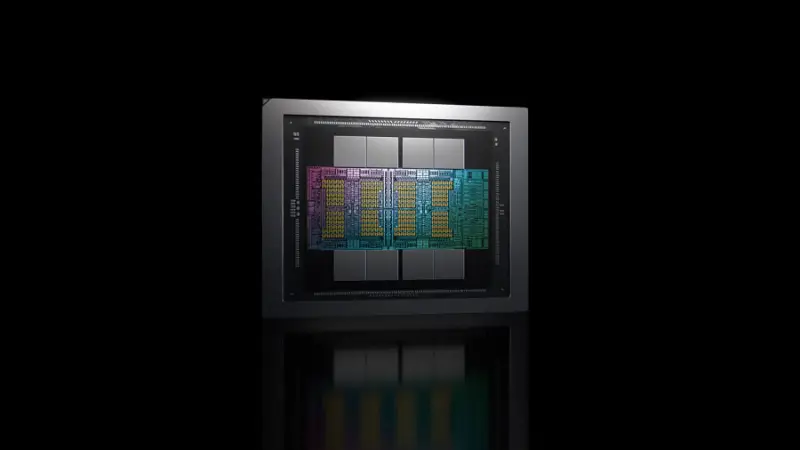
Nvidia’s science computing update has two timelines for research teams to track: Rubin HPC, a graphics processing unit planned for 2028, and software tools that researchers can use sooner. The hardware preview focuses on simulation performance and sparse datasets. The software additions span astrophysics, fusion, cell analysis, scientific AI and quantum computing.
The distinction matters for organizations planning compute capacity. Rubin HPC is still a future product, so teams weighing near term work will need to assess the new libraries and workflows against their existing systems. Nvidia says the software additions join its CUDA-X collection, which is intended to support scientific work on its GPU platform.
Rubin HPC targets simulations and sparse data
Nvidia’s current flagship Rubin GPU has 898 Tensor cores and more than 28,000 CUDA cores. Tensor cores are designed for workloads such as large language models, while CUDA cores can handle those models as well as scientific simulations. The upcoming Rubin HPC is slated to have more than 50,000 CUDA cores, an increase that Nvidia is positioning for high-performance computing tasks.
The card will also use a new version of NVLink, Nvidia’s interconnect for moving data between GPUs and central processors. The current version can transfer 3.6 terabits per second per graphics card. Nvidia has not provided a throughput figure for the new iteration in the details available here, so teams assessing future system designs will need to wait for more information before comparing its bandwidth with current deployments.
Another planned feature is “sparse data acceleration.” Sparse datasets contain many zero values; in scientific work, those zeros can represent measurements or regions where there is no signal. Nvidia gives the example of telescope data, where zeros may mark parts of space with no visible stars. The feature is intended to help with this kind of data, which can arise in fields including biology and astrophysics.
Ian Buck, Nvidia’s vice president of hyperscale and high-performance computing, said faster simulations can help science and engineering agents test ideas and choose next steps. That is Nvidia’s stated rationale for the chip’s focus. For computing teams, the concrete planning point is the schedule: Rubin HPC is expected to ship in 2028, while the company is presenting software as an option for work in the meantime.
New libraries cover astronomy, fusion and cell research
For astrophysics, Nvidia is rolling out cuPhoton.xBeam, a library for analyzing data from the Event Horizon Telescope network, a set of observatories used to study black holes. Nvidia says tasks that historically took a month can be completed in eight minutes with the library. That performance claim is attributed to the company; the information provided does not specify the hardware, dataset or test conditions behind the comparison. Researchers evaluating it will need those details to judge how closely the result matches their own workloads.
The astronomy library arrives alongside cuPhoton.xLens, which is designed to simulate the plasma used by fusion reactors to generate electricity. Together, the tools address different stages of scientific computing: analyzing observational data and modeling physical processes. That distinction may help research groups identify which library applies to their pipeline, though the announcement details do not provide compatibility requirements or deployment instructions.
In biology, Nvidia is open-sourcing cuSpa, a tool intended to speed up cell polygon calculations. Researchers use those calculations to examine cell structure and how cells interact. The company also says rapids-singlecell, an existing cellular analysis tool, is now available to Nvidia users in a containerized format. A container can package software and its dependencies for deployment, but teams will still need to check the package’s requirements against their own environments.
Nemotron for Science packages model training workflows
Nvidia is also introducing Nemotron for Science, a bundle built around Nemotron 3.5 Super VL. The open-source model has 124 billion parameters and activates about one tenth of them at a time. It is partly based on Mamba-2, which Nvidia describes as a more hardware-efficient alternative to the Transformer architecture.
The bundle pairs the model with pre-packaged post-training workflows, which researchers can use to adapt it for particular scientific tasks. Nvidia has also added nearly 50,000 chemistry-related questions. Those questions can support post-training and evaluation of models that have already been adapted. The package is aimed at researchers building specialized agents that can reason through scientific problems and use CUDA-X tools, according to Buck.
For technical teams, the offering combines model assets, training recipes and a chemistry question set. The source details do not specify compute requirements, licensing terms or benchmark results for the workflows. Those are practical details to review before deciding how the package fits an existing research environment.
CUDA-Q expands into error correction and quantum software
Nvidia’s quantum computing work focuses on the software connecting quantum hardware with conventional processors. Quantum systems rely on conventional computing to manage their qubits, and Nvidia’s CUDA-Q suite is designed to link quantum hardware with its GPUs and CPUs. The latest additions include building blocks for quantum software development and an algorithm intended to mitigate qubit errors.
Nvidia is working with IBM and Fermilab on what the companies call a “modular quantum codesign platform.” The planned environment will combine Nvidia DGX B200 systems with IBM quantum hardware. Its stated purpose is to give researchers a setting for developing qubit error correction algorithms and other quantum software. The available details do not give a delivery schedule for the platform or quantify the error mitigation expected from the algorithm.
For infrastructure planners, the update points to a broad mix of software work arriving ahead of the Rubin HPC shipping target. The next useful checks are whether the science libraries support a team’s current GPU environment, what test conditions sit behind Nvidia’s performance claims, and when the company publishes the hardware and platform details needed for procurement and deployment planning.


