Databricks Plans $3 Billion EMEA Investment and Training for 500,000 by 2030
- [email protected] (Bobby Hellard)
- 937 views
Databricks plans to invest about $3 billion across EMEA over three years and train 500,000 people in data and AI skills by 2030.
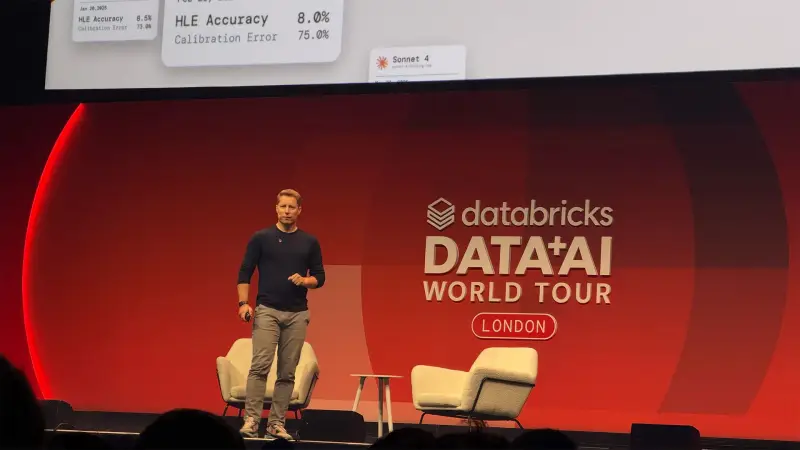
Databricks is tying a planned $3 billion investment across Europe, the Middle East and Africa (EMEA) to a workforce goal: training 500,000 students and professionals in data and AI skills by 2030. The plan combines regional expansion, partner programs and more research and development staff working with customers. For IT leaders, the training target matters because it addresses the people and skills needed to take AI work beyond pilots.
The company described the investment as its largest regional commitment outside the US. About $3 billion is expected to go into hubs and partner programs across EMEA over the next three years. Databricks shared the plan ahead of the fifth edition of its annual Data + AI Tour at ExCeL London.
Regional teams and local capacity
Databricks plans to expand its R&D teams and place more experts alongside customers and partners as they build out AI use. The company named Lakebase, Genie and Unity Gateway among the services involved. More local staff could give organizations closer access to technical expertise as they work through implementation, though the company did not set out specific service levels or delivery timelines for that support.
The regional footprint is also set to grow. Databricks has opened offices and hubs in Amsterdam, Zurich, Milan and Frankfurt, with further locations planned in Abu Dhabi, Stockholm and elsewhere across EMEA. Rich Radley, the company’s VP of field engineering for EMEA, said that local language and market knowledge are part of the rationale: customers in Italy, France, Germany and Sweden need people who understand their markets and can work in their languages.
Radley said Databricks expects its UK organization to reach 1,000 people over the next couple of years. He described the larger local team as giving the company enough scale to take on wider training efforts. The company did not break down how many staff will be assigned to training, how many people will be trained in each country, or how it will measure whether participants gain skills they can apply in workplace projects.
Partners carry much of the training effort
Databricks expects partners to help deliver the 500,000-person target. Radley said the company sees collaboration with organizations that share its goals as a practical way to train large numbers of people across different parts of society. The approach also gives the effort a local dimension, with programs shaped for markets across the region.
Databricks has already named narrower targets within the regional goal: training 100,000 people in the UK and Ireland, and 40,000 students and professionals in the Netherlands. Those commitments sit within the broader target of 500,000 across EMEA by 2030. The company has not provided a schedule for reaching each milestone, so organizations considering participation will need further details on course availability, eligibility and delivery through local partners.
Databricks says it works with 70% of Fortune 500 companies. Its EMEA partners include Adidas, Heineken, HelloFresh and Mercedes-Benz. That customer and partner base may provide routes for training programs to reach organizations already working with the company, but the stated target covers students and professionals more broadly. The plan does not specify how many participants are expected to come from existing customer organizations, education programs or other channels.
Four challenges for moving AI beyond pilots
The training and investment are intended to support organizations as they move AI pilots into wider business use through the Databricks Data + AI Platform. The company grouped the obstacles into four areas: Context, Control, Choice and Cost. Together, they describe a set of implementation questions that IT teams will need to resolve as AI systems gain access to business information and workflows.
Context means grounding AI agents in relevant business knowledge. Teams will need to decide which information an agent can draw on and how that context supports the task at hand. Control concerns governance: what agents can access and what actions they can take. These questions connect technical configuration with organizational rules, so teams will need clear ownership as deployments expand.
Choice refers to avoiding platform lock-in, while Cost covers spending controls and what Databricks called “tokenmaxxing.” The company did not detail specific controls or provide cost figures, so these are areas for customers to examine against their own architecture, usage patterns and budgets. The stated aim is to make those considerations part of scaling AI, alongside the work of building useful applications.
Databricks EMEA senior vice president and general manager Samuel Bonamigo described the region as having substantial talent alongside an AI skills gap. The 2030 target makes workforce development a central part of the company’s regional plan. Administrators and IT managers watching the rollout should look for practical details from Databricks and its partners: where training will be offered, what skills it covers, and how local teams can connect those skills to governed, cost-aware AI deployments.


