Nvidia Donates OpenShell to CNCF and Plans Google Agent Substrate Integration
- [email protected] (Ross Kelly)
- 993 views
Nvidia is handing OpenShell to CNCF community governance and plans to integrate it with Google’s Agent Substrate for agent workloads.
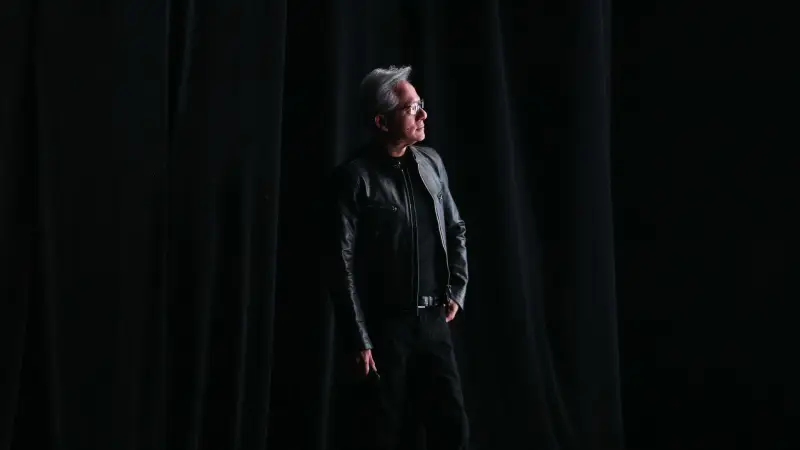
Nvidia’s OpenShell contribution gives the cloud native community a direct role in governing an open source runtime for AI agents. The company also plans to work with Google on Agent Substrate, a Kubernetes framework for agent workloads, and an integration intended to help enterprises govern agents across cloud and on-premises environments.
Nvidia made the commitments at KubeCon in Salt Lake City. The OpenShell donation places the runtime under community governance, giving organizations that use it a role in its development. Nvidia described the contribution as putting “security infrastructure for autonomous agents in the community’s hands to build, inspect, and improve”.
That change matters to teams evaluating agent systems because governance can affect how a project is reviewed and developed over time. Community control creates a setting in which users and contributors can examine the code and take part in improvements. It does not, by itself, establish how an organization should configure or secure an agent deployment; teams will still need to assess the runtime against their own operating requirements.
OpenShell and Agent Substrate
OpenShell is an open source agentic orchestration runtime. Nvidia’s second KubeCon commitment focuses on Agent Substrate, a Google-led, open source framework for orchestrating agent workloads on Kubernetes. Nvidia said it plans to work closely with Google on the framework.
The companies are also collaborating on an integration between OpenShell and Agent Substrate. Nvidia said the aim is to let enterprises secure and govern agents across cloud services and systems running on premises. The details provided do not specify availability, supported configurations or deployment steps, so teams planning an evaluation will need to watch for those details before building the integration into an operational design.
The pairing brings together an agent runtime and a framework for orchestrating workloads on Kubernetes. For IT teams, the practical question is how the two components will fit existing infrastructure and management practices. Organizations will want to understand which controls each component provides, how responsibilities are divided, and whether the integration supports the environments in which their agents run. Those answers are not included in the commitments described at KubeCon.
Why the donation drew attention
Amanda Brock, CEO of OpenUK, said public attention around Nvidia CEO Jensen Huang had overshadowed the OpenShell contribution. She called the donation a significant development and described it as a “last action” in support of open source, an area that had been a focus for Huang and Nvidia in recent years.
Brock also argued that companies benefiting from open source need to keep supporting and funding the wider ecosystem. She pointed to a gap between the pace at which open source is adopted and the level of understanding around it, particularly as security questions accompany new technology. Her view is that transparency, accessibility and interoperability can help build trust and support competition and innovation.
For organizations adopting AI tools, that argument has an operational dimension: the ability to inspect and participate in shared projects can inform how teams evaluate dependencies and track changes. It does not remove the need for internal review. Administrators still need to understand what they deploy, how it interacts with other systems and who is responsible for maintaining it.
Nvidia’s wider open source activity
The OpenShell donation follows other Nvidia work involving open models and frameworks. At Nvidia GTC 2026 in March, the company introduced NemoClaw, built on OpenClaw to support interoperability among coding agents and open source models. Nvidia also announced the Nemotron Coalition, a group intended to advance development of open frontier AI models, with support from Mistral, Perplexity and Cursor.
Forrester vice president and principal analyst Charlie Dai said enterprises increasingly use open models, frameworks and tools across AI infrastructure, model development, agent workflows and governance, while pairing them with commercial offerings to manage risk and scale. That mix helps explain why runtime governance and framework interoperability are receiving attention: organizations may need to connect open components with commercial services and existing systems.
Huang has also publicly backed open source AI models amid growing competition. In a July interview with Axios, he said the world needed open models and praised Chinese models such as Kimi K3. He described competition between open and closed-source models as healthy for the global AI industry.
For administrators, the next useful milestone is more detail on OpenShell’s community governance and the OpenShell–Agent Substrate integration. Those details will help teams judge how the projects fit their Kubernetes environments, cloud services and on-premises systems before deciding how to use them.


