IBM’s AI Operating Model Puts Integration, Governance and Evaluation at the Center
- Victoria Gayton
- 509 views
IBM’s Ritika Gunnar says agentic AI needs integrated systems, governed data, human oversight and ongoing evaluation against business outcomes.
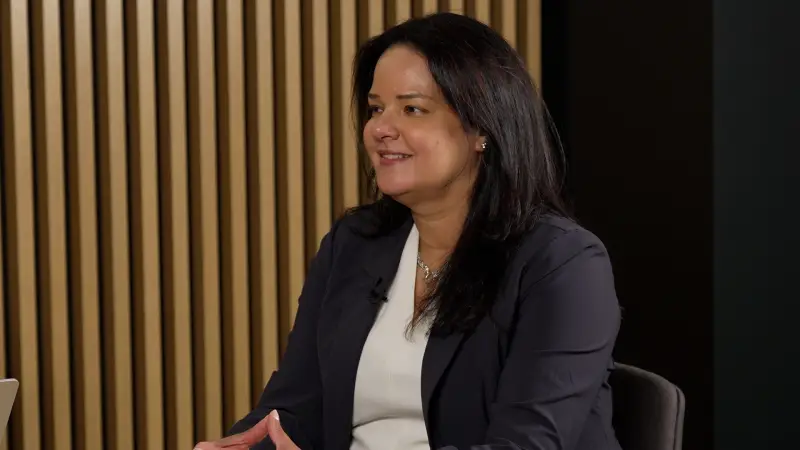
When AI agents keep acting across business systems, the operating challenge changes: teams must manage continuous workloads, not just deploy a model and assess a one-off response. IBM’s Ritika Gunnar says an AI operating model needs to connect existing applications and data with automation, hybrid cloud, human judgment and repeated evaluation.
Gunnar, IBM’s chief performance marketing officer, discussed the approach with Dave Vellante and John Furrier in an interview for IBM’s AI Operating Model interview series. Her comments focused on the practical work of scaling AI across an enterprise: making it fit established processes, governing the information agents use, retaining human oversight where needed, and judging results by business outcomes. The discussion took place ahead of IBM TechXchange 2026.
Connect AI to the systems already in use
IBM’s AI operating model brings together four areas that organizations may currently source from different providers: data, workloads, automation and hybrid cloud. In Gunnar’s description, data provides current enterprise knowledge; workloads cover applications and business workflows; automation helps teams oversee and optimize activity; and hybrid cloud supports operations across distributed environments.
The architecture has to accommodate both new AI workloads and the systems businesses already depend on. Gunnar pointed to SAP and Salesforce as examples: organizations aren’t likely to abandon these platforms simply because they are adding agents. The work is to connect AI to existing applications and processes, so new and established workloads can operate together.
That integration also affects model and agent selection. Data alone won’t provide an effective operating model if teams can’t see how AI is being used across their workloads. Gunnar’s point is that automation and observability help organizations understand which models or agents suit particular tasks, and whether the surrounding systems are working as intended.
Govern context and access as data moves
An agent’s decision may draw on information from operational systems, edge devices and the outputs of other agents. That makes context management a data governance issue as well as a model quality issue. IBM’s approach, as Gunnar described it, is to apply governance early in the data flow, with access rights and data ownership information carried alongside the context.
Her emphasis is on whether the right information reaches an agent at the right time, with permissions and provenance intact. Gunnar argues that this context can support better decisions. For IT teams, the operational question is how existing controls and ownership information will travel when data is assembled from multiple systems for an agent’s use. She did not describe a specific configuration or product setting for doing so.
There is a second kind of context that can be harder to capture: the judgment employees build through experience. Some of that knowledge isn’t recorded in enterprise systems. Prompts and other context can convey parts of it, but Gunnar said capturing tacit knowledge remains a challenge as AI matures.
Keep people involved in essential workflows
Gunnar expects many workloads to become autonomous in nature, while people remain involved in many essential systems. Human oversight gives organizations a way to bring employee judgment into decisions where AI has not yet matured enough to handle the work by itself.
That distinction matters when planning deployments. A workflow that can run autonomously in some circumstances may still need a person to contribute context or judgment in others. Organizations therefore need to consider the business process and the human role alongside the model and its infrastructure. The interview did not specify which processes should be automated or set a threshold for removing human review.
Evaluate decisions against business results
Agent activity creates records of decisions and actions, while prompts capture the instructions supplied to the system. Gunnar described using this information in feedback loops that test different agent outcomes and assess whether a decision was accurate, timely and cost-effective. Those measures can point to ways to improve the workload, such as choosing a different agent or changing how a task is handled.
The measures need to match the intended result. Accuracy, speed and cost each matter, but their relative importance depends on what the business process is meant to achieve. An evaluation loop that only checks whether an agent completed a task may miss whether it delivered the desired business outcome.
For IT leaders, Gunnar’s main advice is to start with process transformation and define the outcomes the organization expects. Then teams can assess how integration, governed data, oversight and evaluation support that work. As agents take on continuing responsibilities, that operating model will need to keep pace with their decisions and actions.


