Microsoft Positions Copilot as a Unified Work Hub for Apps, Agents and Business Data
- [email protected] (Ross Kelly)
- 550 views
Microsoft is bringing Word, PowerPoint and Excel into Copilot, with Work IQ supplying context and Copilot Auto routing tasks to suitable models.
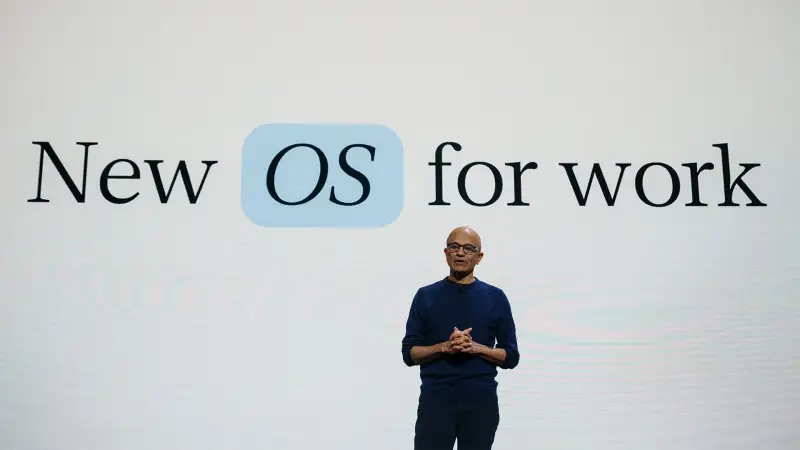
Microsoft wants Copilot to become the main place employees start and complete knowledge work. At the company’s annual Ignite conference in San Francisco, CEO Satya Nadella described it as “the new operating system for work” and outlined a broader role for the service: bringing apps, AI agents and different ways of working into one experience.
For IT teams, that framing matters because it points to a change in how Microsoft expects people to reach work tools. Instead of treating Copilot as an assistant attached to individual applications, Microsoft is presenting it as a common interface for tasks across them. The company announced that Word, PowerPoint and Excel are generally available within Copilot. Copilot Home is intended to provide a “single starting point” for features including Chat and Cowork.
One Copilot surface, several ways to work
Nadella described Copilot as a place where people can use “Chat or Cowork or Code or Autopilot” through a single experience. He also said that apps would function as plugins, while an underlying model system matches intelligence and interaction style to the task and its context.
That approach could change the practical boundary between an application and the assistant that helps someone use it. If employees begin from Copilot Home and move into Word, Excel or PowerPoint as needed, administrators will need to pay attention to how those experiences connect with existing work habits and access to business applications. The source does not detail specific tenant settings or migration steps, so teams will need to check Microsoft’s product documentation for configuration requirements as availability expands.
Copilot Auto is another part of the plan. Microsoft describes it as a “smart router” that selects models and effort levels for a task, optimizing for quality, speed and cost. In practice, that makes model selection part of the service experience rather than a choice users necessarily make for each request. The stated aim is to match the approach to the work at hand; the announcement provides no measurements or detailed criteria for how those choices will be made.
Nadella tied the product direction to Microsoft’s wider goal of building what he called a “frontier ecosystem.” He said businesses need to turn technology advances into outcomes for users, while keeping people at the center of work. His framing leaves room for AI agents to take on tasks, but presents human work and judgment as central to the system rather than something Copilot is designed to remove.
Work IQ supplies context for agents
Behind the Copilot experience is Work IQ, which Microsoft describes as a context layer for agents. Nadella called it “perhaps the most important data asset you have” and said it draws on relationships between people, emails, meetings, chats and projects to represent the fabric of work.
That context is meant to help agents carry out tasks with an understanding of how work is connected. For administrators, the idea raises practical questions about which work information an agent can use and how that access aligns with existing permissions and data practices. The details provided at Ignite do not specify controls, scope or deployment requirements, so teams should look for product documentation before relying on Work IQ in their own workflows.
Microsoft also plans to extend Copilot into role-specific areas, including sales, finance and legal work. Nadella said the company is organizing skills, connectors and plugins for business applications so they can be reached through Copilot surfaces. This suggests that the usefulness of the hub will depend in part on how well it connects with the systems and information each organization already uses.
A wider industry shift
Microsoft’s strategy resembles a direction other software companies have pursued: making a familiar platform the central access point for AI agents and business services. Salesforce, for example, has described Slack as a hub for its agent services, connected to its CRM tools and data platforms. The comparison helps explain the product pattern, but each company’s implementation depends on its own applications and data connections.
For Microsoft customers, the key change to watch is the growing role of Copilot as an entry point across work applications. The Ignite presentation sets out the direction, but the details administrators need for planning—such as applicable licensing, tenant controls and deployment steps—are not specified here. Teams assessing the change should track Microsoft’s documentation for those requirements and evaluate how the Copilot experience fits their users’ existing application access and data workflows.


