Envoy Visitors Critical Adds ID Screening and Approval Records for High-Security Sites
- Duncan Riley
- 362 views
Envoy’s new visitor management tier checks IDs, screens names and records approval decisions; hardware based document checks are in early access.
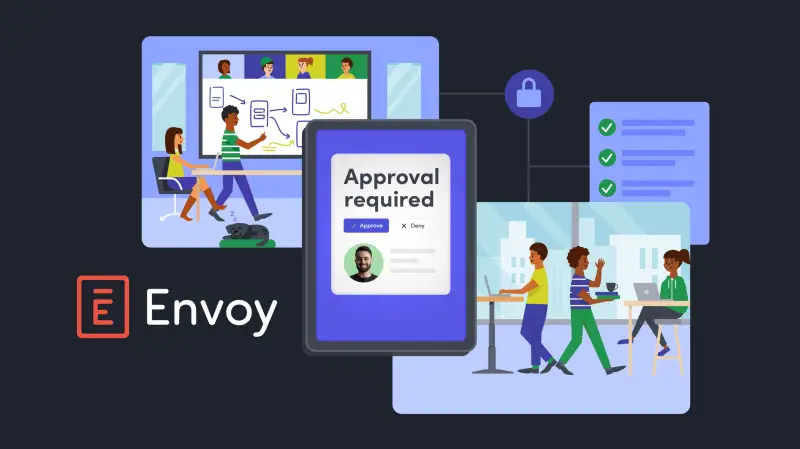
For sites where visitor access can trigger export control and security obligations, Envoy’s new Visitors Critical tier is designed to put identity checks, screening and approval records into one workflow. The service is aimed at defense contractors, semiconductor fabs and other high-security workplaces, where visitor logs spread across email, spreadsheets and separate systems can make it difficult to show who approved an entry and why.
Envoy says the cost of a mistaken admission can extend beyond a security incident. At compliance-driven sites, a wrong entry could lead to penalties, debarment or loss of a facility clearance, the company says. It also says the person who authorized the visit could face personal liability. Envoy cited settlements under the International Traffic in Arms Regulations that have reached $51 million, underscoring the potential stakes it associates with access decisions.
What the visitor workflow checks
Visitors Critical scans a visitor’s government-issued identification and compares the person’s face with the photograph on the document. It then screens names against denied-party and export-control lists using Visual Compliance and Descartes MK, products from The Descartes Systems Group Inc. Contractor qualifications are checked through ISN Software Corp.
After those checks, the visit goes to an approver according to the organization’s own written procedures. The approver’s reasoning is stored with the decision, giving the organization a record it can consult during an audit. The practical value lies in linking the identity check and screening results to the human decision: a site can trace how a visit was reviewed instead of trying to reconstruct the process from scattered messages and files.
That workflow still depends on each organization defining its rules and assigning approval responsibility. Envoy describes the product as applying an organization’s policies; it does not specify a universal approval standard. Administrators considering the tier will need to map their existing visitor procedures to the product’s routing and recordkeeping, and determine who should review exceptions or incomplete checks.
Existing customer example and audit readiness
Attalon Inc., formerly Coherent Corp.’s aerospace and defense business, is among Envoy’s customers. At all 12 Attalon sites, Envoy scans every visitor’s ID before screening the person against denied-party lists. Tim Carr, Attalon’s director of security and environment, health and safety, said an auditor inspecting one location “has effectively inspected them all.” His comment points to the operational goal: consistent visitor handling across multiple facilities can make it easier to demonstrate that the same process is in place at each site.
Consistency does not by itself establish that every local requirement is met. Teams still need to ensure that site procedures, staff responsibilities and the records retained through the system match their own obligations. The product’s stored approval rationale may help answer audit questions, but the source material does not describe retention periods, integrations with other access systems or how exceptions are handled.
Survey figures point to visibility gaps
Envoy says its research of 1,000 security leaders found that 62% of enterprise leaders were very confident they could pass a physical security audit without preparation. Of that confident group, 63% had experienced a security incident during the previous year. In a separate finding about sensitive workplaces, 44% of leaders could not say with confidence who had been in their building the previous day.
Those figures are presented by Envoy, and the available information does not provide additional details about the survey’s field dates or methodology. They nevertheless describe the gap the company is targeting: confidence in audit readiness can coexist with recent incidents, while some organizations lack a clear account of recent building visitors. For IT and security teams, the useful question is whether visitor records can connect a person’s identity, screening outcome and approval decision in a form staff can retrieve when needed.
Availability and company context
Visitors Critical is available now. A separate hardware-based ID verification capability is in an early access program. It uses supported readers to authenticate the document itself and detect forged IDs. Organizations evaluating that capability will need to confirm which readers are supported and how the hardware check fits into their entry process; no device list or general release date is specified.
Envoy says more than 16,000 workplaces across 170 countries use its products, including 92 Fortune 500 companies. The company launched Response, a threat intelligence and incident management product, in August. It raised $111 million in a Series C financing round in January 2022 at a $1.4 billion valuation.
For teams assessing Visitors Critical, the first step is to compare its identity, screening and approval record workflow with the checks already required at each site. The distinction between the available software tier and the early access hardware feature matters for deployment planning: the ID scanning and list screening workflow is available now, while document authentication through supported readers remains in early access.


