Arista Etherlink R4 Targets Distributed AI Inference Networks
- Zeus Kerravala
- 980 views
Arista’s Etherlink R4 adds routing options for distributed inference, with 400G uplinks, integrated encryption and a hardened platform for cell sites.
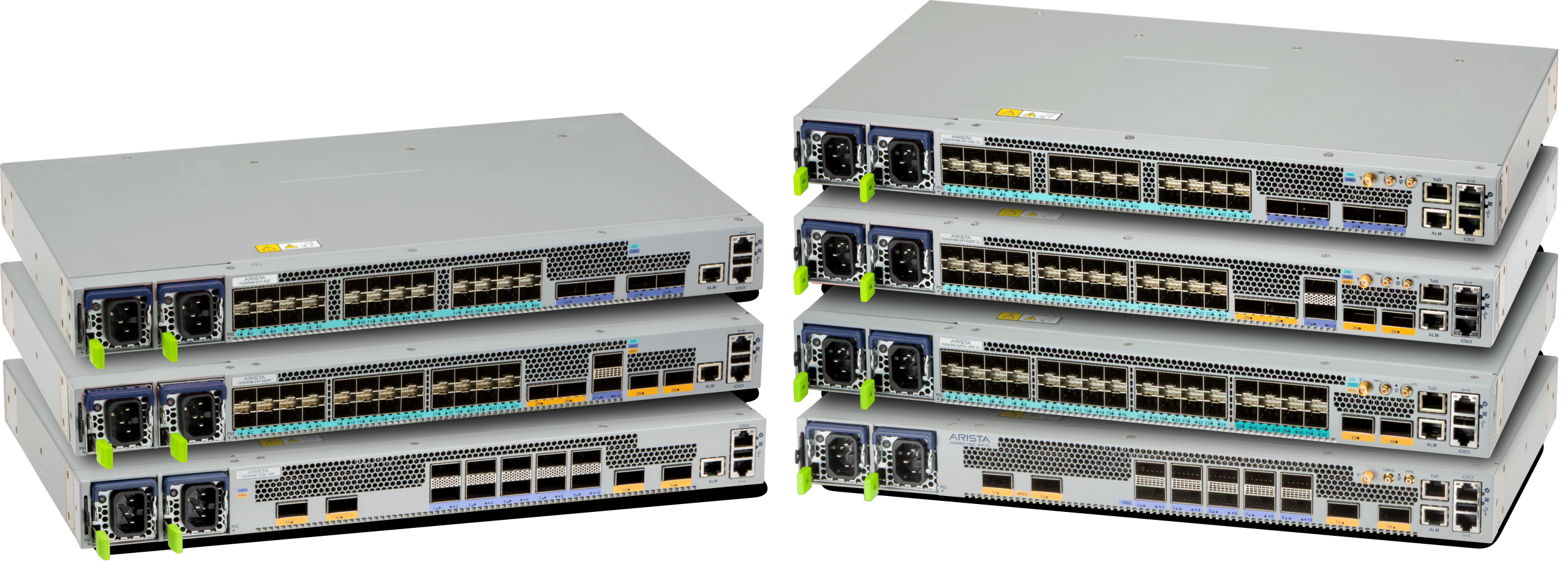
AI networking is expanding beyond the high speed fabrics that connect processors inside large data centers. Arista Networks is targeting the next layer: the routes that carry inference traffic between sites and closer to users. Its new Etherlink R4 platforms are designed for distributed inference, a shift that puts requirements such as traffic management, encryption and long service life on networks that were often treated as basic connectivity.
The company introduced the systems at SC26, alongside a pluggable optical line system for data center interconnect. Arista says the R4 platforms use Broadcom Jericho and Qumran silicon, with power consumption up to 60% lower than competing 7-nanometer and 16-nanometer platforms. The products are available now, except the 7020HR4, which is scheduled to ship in early 2027.
Inference moves network planning beyond the data center
Arista assistant vice president of product line management Brendan Gibbs said the forces pushing AI training across multiple sites are also likely to spread inference across locations. He put scale-across at roughly 30% of Arista’s AI business, an indicator that distributed infrastructure is already part of the company’s market.
The network implications follow from where inference needs to run and how its traffic behaves. When AI services are spread across sites, data must travel between them and to users. That makes the network connecting facilities more consequential. It needs capabilities often associated with data center back-end fabrics, including deep buffers, traffic engineering, support for multiple tenants and encryption.
That change broadens Arista’s product mix. The company has recently focused on dense 800G and 1.6T systems and liquid cooling. Etherlink R4 is a smaller, less expensive tier aimed at customers who need routing features without the capacity of its largest platforms. Arista serves hyperscalers, neoclouds and enterprises building local AI systems; for those customers, the front end needs feature depth and room to grow, even if it doesn’t require massive bandwidth today.
400G uplinks and a longer replacement cycle
The R4 routers are positioned as entry-level systems but include 400G uplinks. That capacity may exceed immediate requirements at some sites, yet it could help customers avoid replacing chassis as traffic grows. Gibbs described a target service life of 10 years, with customers changing optics rather than the platform itself.
Future demand is uncertain, particularly as AI agents develop and add network traffic. The practical case for headroom is straightforward: replacing equipment at a remote site can be more difficult than installing capacity that is not fully used at first. Arista also co-designed the 7280R4 with a hyperscaler seeking a bridge from gray optics to coherent optics, evidence that the platform reflects specific large customer requirements.
The ruggedized 7020HR4 is aimed at 5G and AI-RAN cell sites. Telecom providers have been less visible in the AI infrastructure buildout, but their sites are near users and could support lower latency services. The platform gives providers a possible network foundation for managed AI infrastructure.
The opportunity may vary by region. The analyst who wrote the original commentary argued that providers in Europe and Asia-Pacific, including BT, NTT and Telstra, are better positioned to sell managed services than U.S. carriers, where many enterprises primarily expect connectivity. Local data requirements could also make provider hosted services more relevant. Telecom has not been a core Arista market, so adoption there would add a new customer segment.
Software quality and encryption matter at the edge
Software quality is another part of the pitch. The commentary cited Arista’s lower reported CVE count since 2019 compared with competitors, including during a period of increased AI-assisted vulnerability discovery following Anthropic’s Mythos. CVE totals are difficult to compare because they depend on testing, installed base and reporting practices; some vendors also group several issues under one record. Gibbs agreed that the counts alone don’t establish product quality, while describing them as one measure of Arista’s software quality.
For operators, the more direct concern is patching. Customers may delay updates when upgrades risk downtime or break existing services. Trust in the software can make teams more willing to patch promptly, reducing the time systems remain exposed. As AI tools speed discovery, support quality and equipment longevity become operational considerations.
Arista also offers wire-speed MACsec and IPsec on every port. Those features can help secure traffic between sites, but they don’t replace firewalls. Gibbs said Arista expects Palo Alto Networks products to remain behind its systems in the network. Validated designs for distributed inference could help customers understand how to combine routing and firewall controls.
Optical links and customer requirements
The optical line system is intended to simplify metro connections over dark fiber. Arista is reselling the equipment rather than making optical systems itself, but it offers an EOS-integrated path to transport 25.6 Tbps across a metro network. For customers, the appeal is a managed package for a technically involved part of inter-site networking.
Customers quoted in the commentary pointed to compact hardware, service support, throughput, power efficiency and confidence in EOS software. Douglas Fast Net CTO Jon Vradenburg said the company needed “a compact platform that supports the services our business and carrier customers rely on.” Takayuki Sakou of Japan’s STNet cited “higher throughput and improved power efficiency while maintaining the quality of the EOS software we trust.”
The major AI networking challenge is shifting toward the connections between distributed systems and their users. Etherlink R4 gives Arista a broader routing offer for that tier, with capacity for growth and features intended for multi-site operations. IT teams evaluating it should map where inference will run, what uplinks those sites need and how encryption, firewalls and software updates fit into their operating model.


